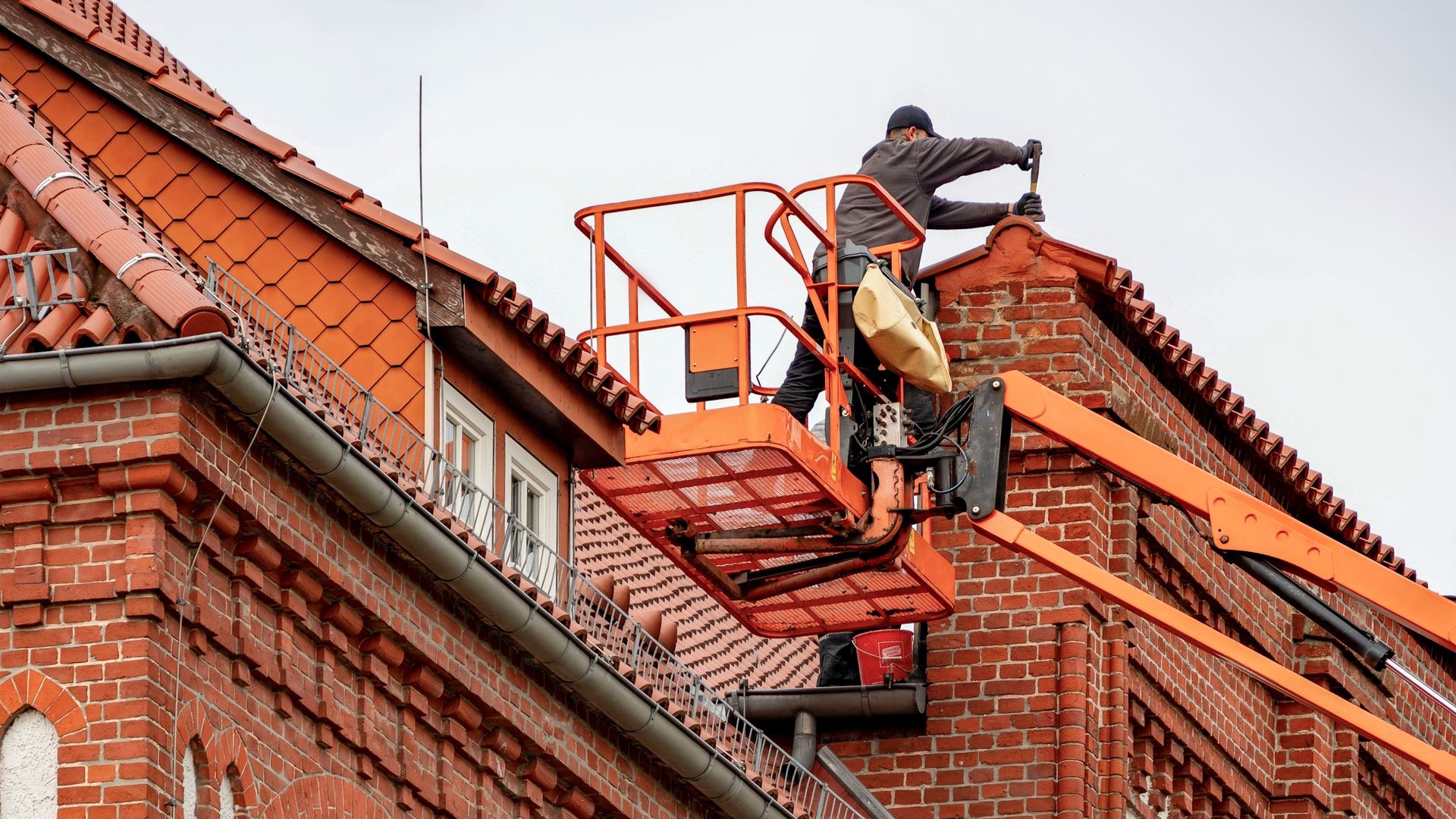
Cyprus · roofing
Roofing in Cyprus.Compare several quotes at once.
Roofing in Cyprus covers two largely separate disciplines — flat concrete roofs, which dominate the housing stock, and pitched tile roofs found mainly on newer villas. This page describes how each is built and maintained, how contractors price the work, and which checks are worth making.
- Registry-sourced data
- Field-level provenance
- Free removal on request
Roofing companies in Cyprus
- #2PromotedWaterproofed Cyprus
Waterproofing, roofing and damp work across Cyprus, with the membrane system named in the quote.
How the trade is organised
There is no roofing licence in Cyprus. Nobody issues classes, and no register exists that a homeowner can consult before hiring, which puts roofing in the same position as plastering and unlike electrical installation, where the utility will not connect a property without certification from a licence holder.
Two routes bring formal oversight to roof work nonetheless. The first is the building permit: where work engages the permit system, it is designed and supervised by professionals registered with ETEK, the Cyprus Scientific and Technical Chamber, and the approval process carries its own requirements. The second is the manufacturer approval attached to waterproofing systems, where a warranty on the finished assembly is generally conditional on installation by a contractor the manufacturer has approved.
Neither route covers a straightforward recovering of an existing roof, which is the most common job in the trade. For that work, the checks are the ones the client makes.
Flat concrete roofs
The flat roof is the Cypriot default, and understanding how it is built explains most of what goes wrong with it.
A reinforced concrete slab spans the building. Above it sits a screed laid to create falls toward the drainage outlets, and above that the waterproofing layer that actually keeps water out. Insulation may be present above or below the slab, or absent entirely on older construction. The surface may be left exposed, tiled where the roof is used as a terrace, or finished with a reflective coating.
The functional points are the falls and the details. Falls decide whether water reaches the outlets or stands in a pond over a low spot, and standing water finds weaknesses that draining water never tests. The details — upstands against parapets, the dressing into outlets, the treatment of every penetration, and the threshold where a roof meets a terrace door — are where the covering has to stop, turn or pass around something, and they account for the overwhelming majority of leaks.
The slab itself rarely fails. What fails is the layer above it, and the distinction matters when a contractor proposes a scope: replacing a covering is routine, while a slab needing structural attention is an engineer's project rather than a roofer's.
Pitched tile roofs
Newer villas and some traditional properties carry a pitched structure, and the work is a system rather than a covering.
Beneath the tiles sit battens at centres set by the tile, an underlay that carries away any water passing the tiles, and a fixing regime. Ridges and hips are traditionally bedded in mortar, which cracks as the structure moves through the daily temperature cycle; dry-fix systems are the alternative and behave differently over time. Valleys, flashings and abutments handle the junctions.
Wind uplift deserves specific mention. Exposed and coastal sites in Cyprus take strong wind, and the perimeter and ridge tiles are where uplift concentrates. Mechanical fixing in those zones is a specification requirement rather than a refinement, and it is invisible once the roof is finished.
A firm competent on flat roofs is not automatically competent on pitched ones. The materials, the failure modes and the working methods differ, and a contractor's answer about which they mainly do is worth asking for.
What roofing contractors do
Recovering and replacement. Removing a failed covering and installing a new one, with any correction to falls and any insulation added at the same time. This is the substantial end of the trade.
Repair and leak tracing. Finding where water enters, which is rarely where it appears, and correcting the defect. Water travels along a slab or a batten before it shows, so diagnosis is a distinct skill from repair.
Maintenance. Clearing outlets, particularly before the rains, and inspecting details. Inexpensive, routinely skipped, and the single practice that most extends a covering's life.
Terrace and roof-level construction. Tiled terraces, pergolas, parapet work and the mountings for tanks, condensers and solar arrays — all of which interact with the waterproofing and are frequently installed by others without the roofer being consulted.
Assessing a contractor
- Insurance. Working at height, over an occupied building, with a real possibility of water damage below. Liability cover should be stated plainly.
- Which roof type they mainly work on. Ask for the split, and for a completed example of the type in question that can be looked at.
- Manufacturer approval. Where a system warranty is part of the offer, confirm the contractor currently holds the approval that warranty requires.
- How they intend to diagnose. For a leak, a contractor who describes how they will establish the entry point is offering a diagnosis. One who proposes a replacement without one is offering a product.
- Access arrangements. Who provides scaffold or edge protection, and whether the arrangement is safe for people working above an occupied home.
- What the warranty separates. Material and workmanship are different promises with different durations, and they are frequently presented as one.
How the work is priced
Recovering is measured by area, with details taken separately — upstands and edges by the linear metre, outlets and penetrations by the number. On a pitched roof the tiles are measured by area and the ridge, hip, valley and abutment work by length.
Three items sit around the roofing itself and are treated inconsistently between contractors. Access is the largest: scaffold, edge protection and lifting material to roof level are a real cost with a hire duration, and a quotation that omits it is not lower than one that includes it. Disposal is the second: stripped covering, old screed and broken tiles are construction waste going to a licensed facility, charged by weight or volume. The third is the substrate — what happens if the deck or screed is found to be worse than assumed, which should be a stated rate rather than a conversation held on the day it is discovered.
Repair and leak tracing are usually charged on time, because the effort is unknowable until the cause is found. A cap, after which the contractor reports before continuing, keeps that proportionate.
The levels below come from published sources rather than from quotations gathered here, and they describe a general band rather than any particular roof. The considerations above are what place a specific job within it.
| Work | Indicative range | Midpoint | Published sources |
|---|---|---|---|
| RoofingSupply and installation of a clay or concrete tile roof covering. The range is the published Cyprus material cost for clay and concrete tiles (EUR 15-35/m2) added to the published professional installation rate (EUR 20-40/m2); both components are stated separately by the source and are combined here. Excludes the structural deck or trusses, insulation and waterproofing. Slate raises the material component to EUR 40-70/m2, and steep or hard-to-access roofs push labour to the top of its band. | €35–€75per m² | €55 |
Indicative range compiled from published sources, not a quote. It shows the level those sources report for this kind of work, not what your job costs. Only a site visit and a written quote for your actual scope produce a real figure. Sources compiled 2026-08-02.
What drives the cost
- Whether the existing covering is removed or overlaid. Overlay is cheaper and is sometimes right; where the failure sits beneath the old layer, it traps the problem.
- Whether falls are being corrected. A roof that ponds because it was laid flat will pond under a new covering. Correcting it means a screed, which is a substantial addition.
- The number and complexity of details. A plain rectangle with one outlet and a simple parapet is a different job from a roof carrying tanks, condensers, a solar array and a terrace door.
- Access. Height, street width, parking and whether material can be lifted mechanically or has to be carried.
- Insulation. Included or not, and to what specification.
- Season. Roof work depends on weather and on surface temperature, and programme risk is priced.
Recurring mistakes
A leak is answered with a replacement before anybody establishes where water is entering, and the new covering leaks in the same place. Drainage is never examined, so a blocked or undersized outlet that caused the failure recreates it under the new layer. Solar panels, tanks and air conditioning supports are fixed through a sound covering by installers who are not roofers, and each fixing becomes a leak years later. Access is left out of one quotation and included in another, and the comparison is made on the totals. Maintenance is never carried out, so a defect that would have cost little at the detail stage is found when it has reached the ceiling below. And a warranty is treated as cover when its conditions — maintenance intervals, no foot traffic, no subsequent penetrations — were breached in the first year.
Regional conditions
Coastal roofs in Limassol, Larnaca, Paphos and along the Famagusta coast face salt-laden air, which corrodes fixings, flashings and any metal component of the system, and higher wind exposure, which concentrates uplift at the perimeter. Both are specification questions decided before work begins.
Inland, heat governs. A dark roof in Nicosia reaches temperatures far above air temperature through a long summer, and the daily cycle works every lap and joint in the covering. Reflective finishes reduce both the movement and the heat passing into the room below.
In the Troodos, precipitation is heavier, freeze-thaw becomes real at altitude, and pitched roofs are more common — which shifts the trade there toward tile work and toward the drainage capacity that lowland roofs rarely need.
Across the island, rainfall arrives concentrated rather than spread. That tests drainage capacity rather than water resistance, which is why outlet number and size belong in a roofing conversation and not only in a plumbing one.
Permits and what triggers them
Repairing or recovering an existing roof is maintenance, and it does not normally engage the permit system.
Four situations do. Changing the roof's form, pitch or height alters the building's envelope. Building over a flat roof, or converting a roof level into habitable space, adds floor area and engages both planning and building control. Altering the external appearance in an area where elevations are controlled, or on a listed or traditional building, brings its own consents. And structural work to the slab or to a pitched structure requires an ETEK-registered engineer regardless of how the rest of the project is classified.
Solar installations on a roof sit in their own category and are worth establishing separately before mountings are fixed, since the fixing detail and the waterproofing warranty interact.
Which consents a specific property needs depends on its designation and its district, and the framework is set out in the reference on planning and building permits.
Common questions
- Are roofing contractors licensed in Cyprus?
- Not as roofers. There is no trade licence for roofing in the way there is for electrical installation, though structural alterations to a roof require an engineer registered with ETEK, and any work carried out under a building permit is supervised through that route. For maintenance and recovering, assessment falls to the client.
- What kind of roof do most Cypriot properties have?
- A flat reinforced concrete slab, usually with a screed to create falls and a waterproofing layer above that. Pitched tile roofs appear on newer villas and on some traditional properties, and a few older buildings carry a lightweight pitched structure built over an original flat slab.
- How long does a roof last in Cyprus?
- Less than the same construction would last in a temperate climate, because ultraviolet exposure and a wide daily temperature swing work the material continuously. Service life depends far more on the covering, the quality of the detailing and whether maintenance happens than on the structure beneath, which normally outlasts several coverings.
- Where do Cypriot roofs usually fail?
- At the details rather than in the open field — upstands against parapets, drainage outlets, and the points where pipes, solar mountings, water tanks and air conditioning supports pass through the covering. Every one of those is a deliberate hole in the layer keeping water out.
- Does roof work need a permit in Cyprus?
- Recovering or repairing an existing roof is maintenance and generally does not. Changing the roof's form or height, building over a flat roof, adding a habitable level or altering the external appearance in a controlled area are different matters, and each engages the permit system through the district authority.
- Can insulation be added while the roof is being redone?
- Where the covering is coming off, the access, the strip-out and the making good are already being paid for, so adding insulation at that point costs far less than commissioning it separately later. Whether it is included, and at what specification, should be settled before quoting.
01Before you shortlist
Reading a roofing listingthe way it was written.
Each profile records what could be verified and where every detail came from. These four checks use that record properly.
Check the source of each field
Every detail on a profile names its source and retrieval date. A claim without a register behind it is presented as exactly that.
Provenance
Compare within the category
Categories group businesses doing comparable work, so registrations and coverage mean the same thing across a page.
Like for like
Narrow by district
Coverage is recorded town by town. A firm listed in Paphos rarely quotes in Famagusta without pricing the distance in.
5 districts
Contact the business directly
Profiles link the company’s own channels. The directory takes no commission and adds no intermediary.
No commission

Need roofing?One form. Up to five quotes.
Tell us what you need and we will gather quotes from qualified companies where you live.